 DKT
Key points on more road rules for the Australian Capital Territory learner test. Each answer is checked against the official Australian Capital Territory handbook or road rules; use the practice-question links to test yourself.
A school crossing supervisor holding a hand-held "Stop" sign steps onto the crossing. When may you go?
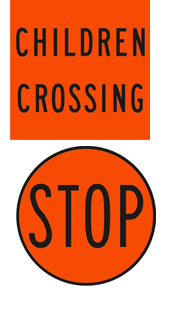
Answer: Only when nobody is on the crossing and the sign is no longer shown
You must remain stopped until nobody is on or entering the crossing and the sign holder no longer displays the sign towards you, or signals that you may go.
Practice question 16 · official source
What speed limit applies on an ACT road with no speed sign?
Answer: 50 km/h
The ACT default speed limit is 50 km/h. Major roads are signed at 60 km/h, and school zones and town centres are signed at 40 km/h.
Practice question 17 · official source
On a road with a white dividing line, which side of the line do you normally drive on?
Answer: On the left side of the line
You must drive to the left of the dividing line except in the limited situations the rules allow, such as overtaking where permitted.
Practice question 18 · official source
A driver cuts across double unbroken lines on a bend to take a straighter path. What is wrong with this?
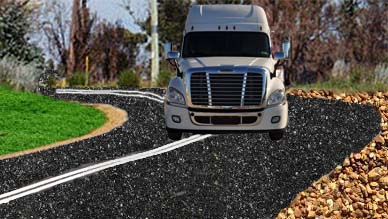
Answer: It is illegal and risks a head-on collision
You must keep to the left of continuous dividing lines. Cutting across them on a bend, where you cannot see oncoming traffic, is illegal and dangerous.
Practice question 19 · official source
Can you stop beside a vehicle that is parked at the kerb (double parking)?
Answer: No, you must not stop beside a parked vehicle
Stopping beside a parked vehicle, between it and the centre of the road, is not allowed, even briefly for deliveries.
Practice question 20 · official source
You drive far below the limit for no reason on a clear road and a queue builds behind you. What does the law say?
Answer: Driving abnormally slowly can count as unreasonably obstructing traffic
You may drive slower than other traffic, but driving abnormally slowly with no good reason can be an offence.
Practice question 24 · official source
What does the law require when you drive behind another vehicle?
Answer: Stay far enough back that you could stop safely to avoid hitting it
The rule has no fixed distance. You must be able to stop safely if the vehicle ahead brakes suddenly.
Practice question 29 · official source
Your lane ends as you join a freeway. How should you merge with the traffic?
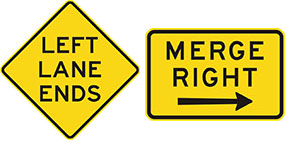
Answer: Give way to vehicles in the lane and find a safe gap
When you cross a broken line to join a motorway you must give way to vehicles already in that lane. Check mirrors and blind spots and choose a safe gap.
Practice question 30 · official source
In a built-up area a bus with a "Give way to buses" sign pulls out from a stop, indicating right, ahead of you in the left lane. What must you do?
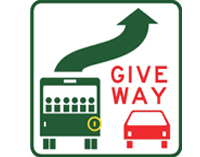
Answer: Give way to the bus, slowing or stopping if needed
In a built-up area, a driver in the left lane must give way to a bus displaying the sign with its right indicator operating and about to enter the lane.
Practice question 34 · official source
In a built-up area, a bus with a Give Way to Buses sign on its rear signals to leave a bus stop ahead of you. You should:
Answer: Slow down and give way so the bus can move out
Where the bus displays the sign and signals, drivers in the lane it enters must give way.